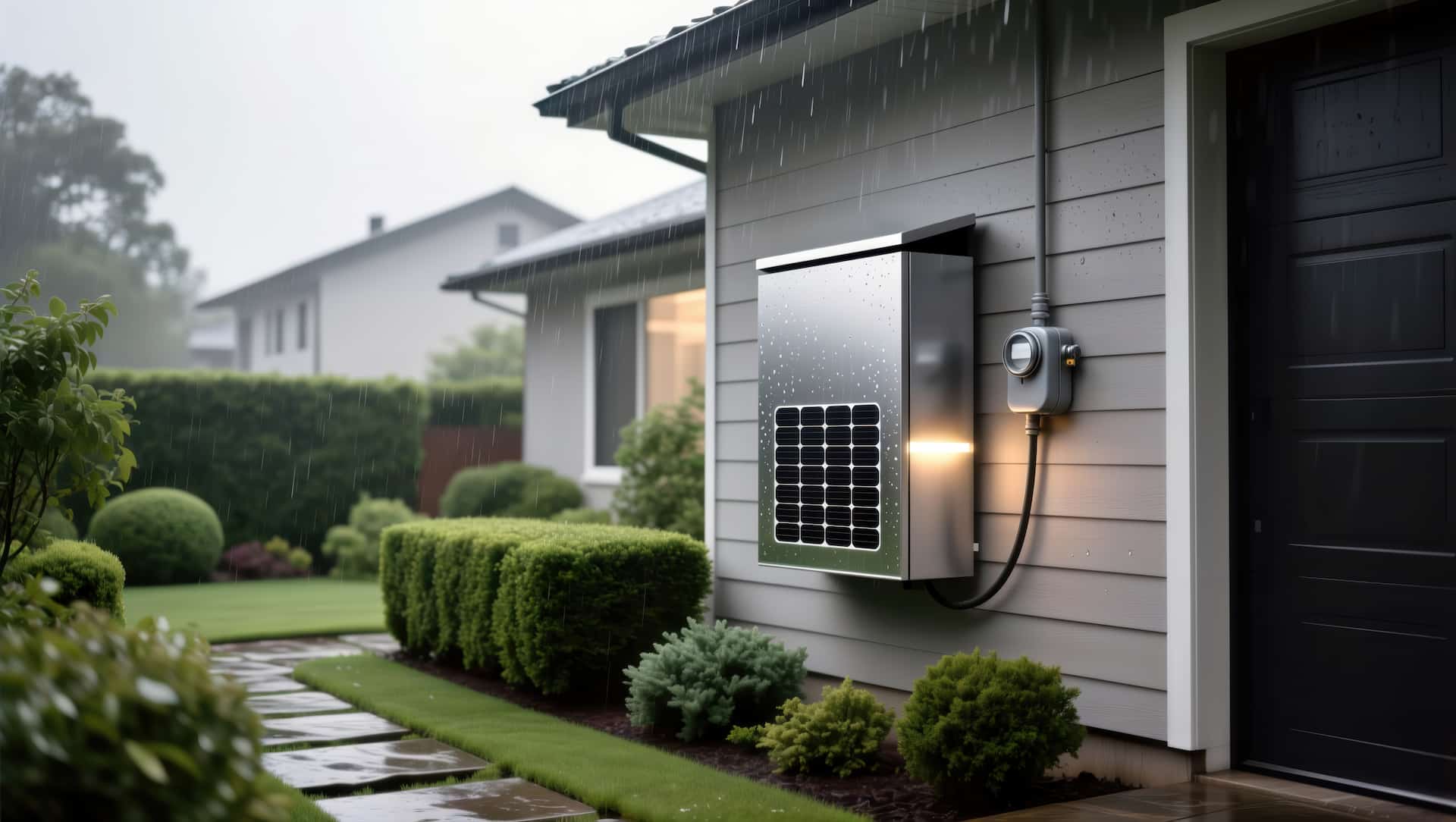
Yes, solar batteries can be installed outside in Australia when the installation meets safety, weatherproofing, and compliance requirements.
Safe outdoor solar battery installation requires extra preparations for Australia’s often harsh conditions. Extreme heat, moisture, and storms mean outdoor solar batteries need proper protection and maintenance for safe and functional backup power.
We already went in-depth about solar batteries in our Solar Battery Power Guide. Now, we’re answering a common question we hear, “Can solar batteries be installed outside?”
We’ll explain the pros and cons of indoor vs. outdoor battery installation, safety and maintenance requirements, and AS/NZS 5139 rules. Our goal is to help you feel confident in making an informed decision about indoor vs outdoor battery installation.
Why Outdoor Battery Location Matters in Australian Summers
Summer’s high temperatures and peak grid demand have more homeowners adding battery storage for reliability. Many of our clients love the idea of backup power if a huge summer storm hits. But we also work with plenty of homeowners who don’t have an appropriate indoor space for a solar battery.
Australian summers often mean soaring temps, severe storms, and harsh UV rays. These conditions, especially high heat, can affect a solar battery’s performance and lifespan.
A safe, protected battery location is crucial at all times, especially during extreme weather.
You May Also Like: Are Solar Batteries Safe?
Indoor vs Outdoor Solar Battery Installation
Indoor Installation
Indoor installation offers more stable temperatures and better protection from heat and weather. This protection usually translates to longer solar battery life.
Common indoor installation areas for solar batteries include:
- Garages
- Dedicated battery areas
- Sheltered spaces
Outdoor Installation
Outdoor installation is allowed for most modern battery systems, provided the conditions are appropriate.
For outdoor installation, it is necessary for a solar battery to:
- Meet IP rating requirements
- Be installed in a safe, compliant location
- Be installed in a shaded area with ample battery ventilation
- Be mounted to a solid surface
We also suggest installing the battery in a location that can be easily accessed for service or maintenance. Another consideration is the distance from your solar panels. The closer the battery is to the panels, the less distance the energy needs to travel.
An ideal outdoor solar battery location will have natural protection from the elements, good airflow, and easy access.
What AS/NZS 5139 Says About Battery Placement
Key Rules Explained Simply
Australia’s Clean Energy Council requires all solar battery storage systems to be compliant with AS/NZS 5139:2019.
The Australian Energy Regulator (AER) determines the regulations for safe residential solar battery systems.
Battery placement regulations in Australia include:
- Rules regarding proper battery ventilation
- Batteries must be kept away from ignition sources or habitable rooms
- Regulations regarding safety covers and separation distances
- Battery ventilation rules
- Placement restrictions
- Electrical compliance with all Australian electrical standards, such as AS/NZS 5139:2019
Note: Outdoor installations usually fall under Zone B, which allows more flexibility.
Ensuring Your Outdoor Install Is Compliant
To ensure your outdoor solar battery installation is compliant, follow these guidelines:
- Use a licensed, accredited installer familiar with solar battery safety
- Confirm the mounting surface is non-combustible and structurally suitable
- Ensure the area has adequate airflow for battery ventilation
- Avoid areas exposed to flooding, hose pressure, or direct radiant heat sources
- Make sure the battery is protected from dust, moisture, rodents, and insects
- Ensure your solar battery is specifically designed for outdoor use, including the appropriate IP rating
When you work with our team at Aus Energy Solar, you can rest easy knowing we comply with all Australian standards.
You May Also Like: Perth Solar Batteries and Storage
IP Ratings and Why They Matter Outdoors
Understanding IP Ratings for Home Batteries
We know IP ratings can be confusing. We tell our customers to think of IP ratings as a battery’s resistance to dust and water.
Most outdoor-rated solar batteries will require at least an IP55 rating. Here’s an easy way to understand IP rating solar battery numbers:
- The higher the first IP rating solar battery number, the less dust that can get inside the battery
- The higher the second IP rating solar battery number, the less moisture that can get inside the device
Weather Exposure and Real Australian Conditions
Australia is notorious for its extreme weather and harsh climate. The rain, dust, coastal air, and heat all influence outdoor battery safety.
Learn more about how weather conditions affect solar systems in our guide here: Solar Weather Effects.
How Heat Impacts Outdoor Battery Performance
Thermal Stress and Efficiency Loss
Lithium batteries perform best between about 10 and 30 degrees. The intense heat in summer can degrade components and reduce battery lifespan.
This makes adequate shade and airflow critical to safe outdoor solar battery installation. A compliant location will maximise your solar battery’s lifespan and safety.
When Outdoor Heat Becomes a Problem
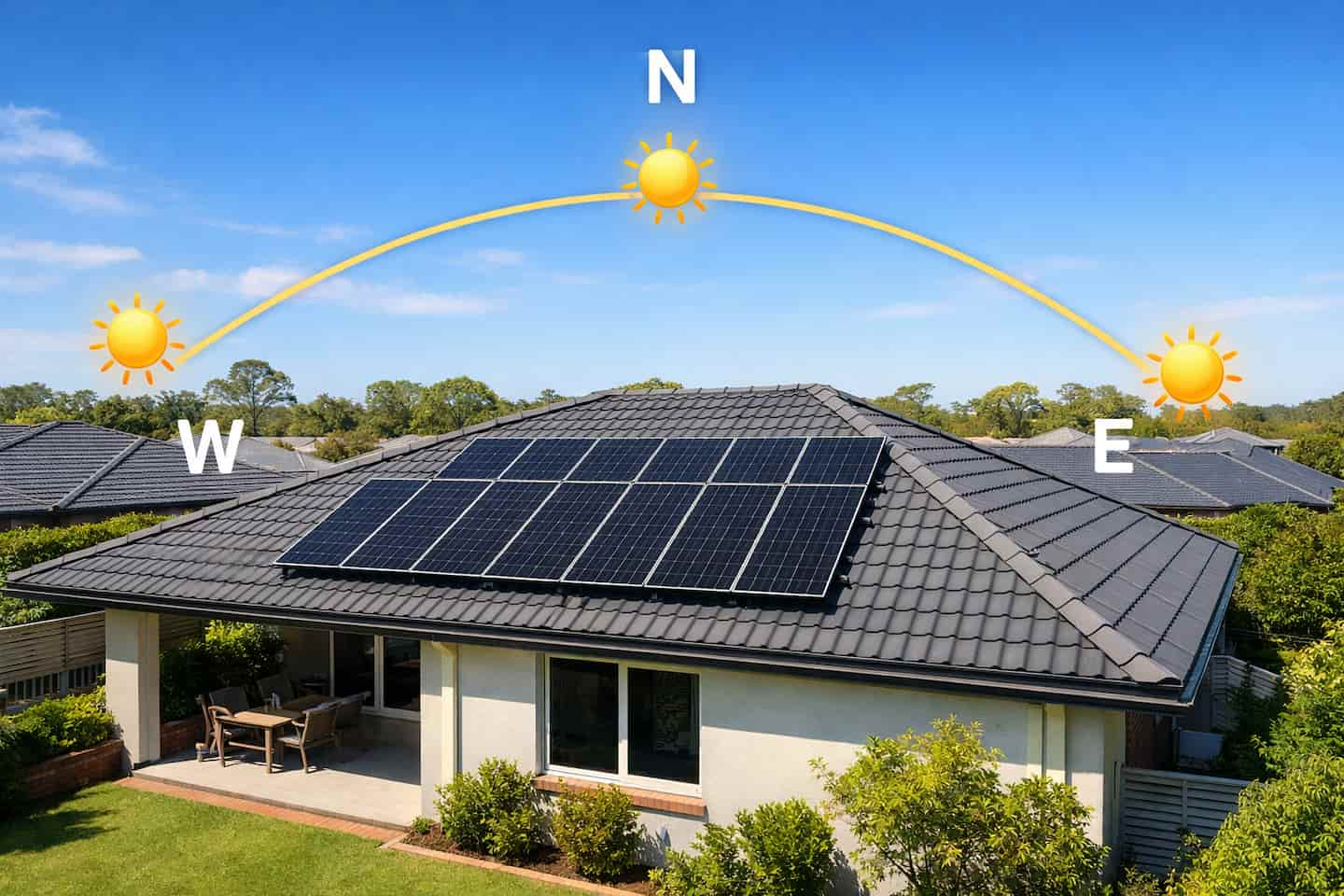
One of the biggest risks to an outdoor solar battery is direct heat. UV rays, especially in Australia, are incredibly harsh. Over time, units mounted in direct sunlight or against hot west-facing walls face decreased efficiency and degradation.
Protecting the battery and choosing the right outdoor battery location are vital to preserving a unit’s function and efficiency.
Best Practice for Installing a Battery Outside
Shade, Ventilation, and Safe Mounting
Here are some guidelines to follow to ensure best practice for safe outdoor solar battery installation:
- Choose a shaded southern or eastern wall where possible.
- Use a battery-rated enclosure if exposed to weather
- Maintain a gap around the unit for airflow to ensure sufficient battery ventilation
- Have a licensed installer choose the safest solar battery location
Ongoing Care for Outdoor Batteries
Caring for an outdoor solar battery is fairly straightforward. These simple steps can prolong a battery’s lifespan and efficiency:
- Schedule annual checks with a licensed installer to improve safety and performance
- Keep the battery and the area around it clear of dust and debris
- Monitor your outdoor battery and watch for signs of loose connections, damage, or corrosion
Learn more about taking care of your solar system here: Solar Panel System Service and Maintenance.
Pros and Cons of Outdoor Solar Battery Installation
Pros
- Saves indoor space (this is usually the biggest reason we see customers interested in an outdoor solar battery location)
- Easier access for servicing
- Works well when a shaded, ventilated wall is available
Cons
- Greater exposure to the elements, such as heat, moisture, and extreme weather
- May require additional protection and planning
- Lifespan may be reduced if installation is not carefully planned
| Outdoor Solar Battery Installation | PROS | CONS |
| Saves space indoors | Increased exposure to the elements | |
| More convenient access for service visits | May require additional protection and planning | |
| Can be efficient and safe when installed properly | Lifespan may be reduced due to improper location or lack of maintenance |
When an Indoor Location Is the Better Choice
For indoor vs. outdoor battery installation, an indoor location may be more suitable:
- For homes with no natural outdoor shade
- When heat exposure is high
- When indoor temperature control improves longevity and safety
When an Outdoor Location Works Well
Solar battery location works especially well in outdoor areas with:
- Naturally shaded areas
- Solid masonry walls
- Locations protected from hose spray and water pooling
- Areas with good airflow for sufficient battery ventilation
Choosing the Right Spot for Your Home
Choosing the ideal solar battery location for your home will depend on:
- Local climate
- House design and available space
- Personal preference
- Roof orientation
- Shade availability (avoid any location exposed to direct afternoon sun)
- Battery model
You May Also Like: How Do Solar-Powered Batteries Work
Safe, Reliable, and Ready for Summer
Outdoor solar battery installation is common and safe when done properly. Outdoor battery locations must be protected from excessive cold or heat, dust, and moisture.
A compliant outdoor solar battery installation will involve a solid mounting surface, battery ventilation, and protection from the elements.
The best way to ensure a safe, compliant solar system is to schedule an assessment with a qualified installer.
At Aus Energy Solar, we’ve installed hundreds of residential solar systems throughout WA. We can determine the most efficient setup for your solar battery, including whether an indoor or outdoor location is best. Contact our team to speak with one of our professional, friendly installers.