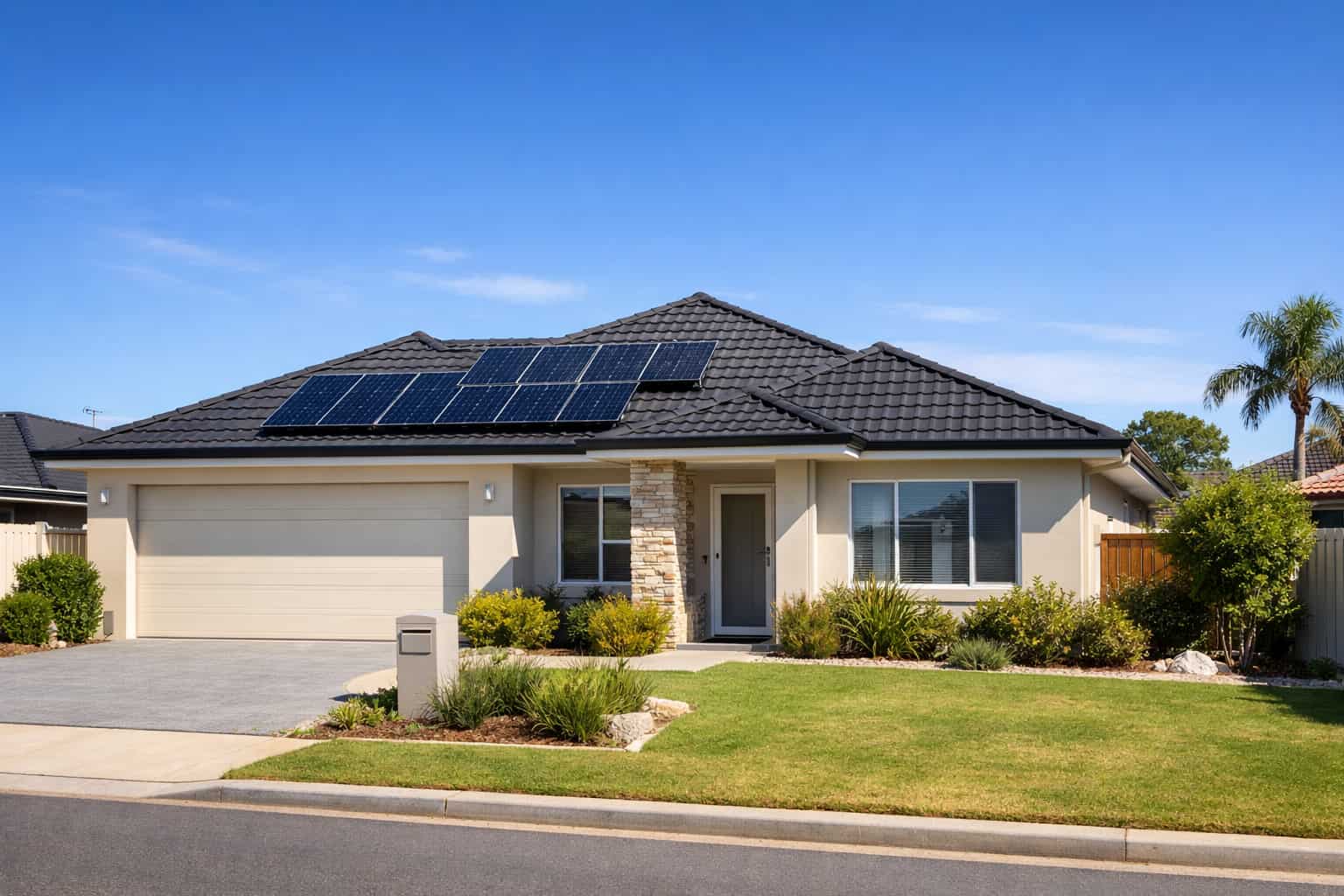
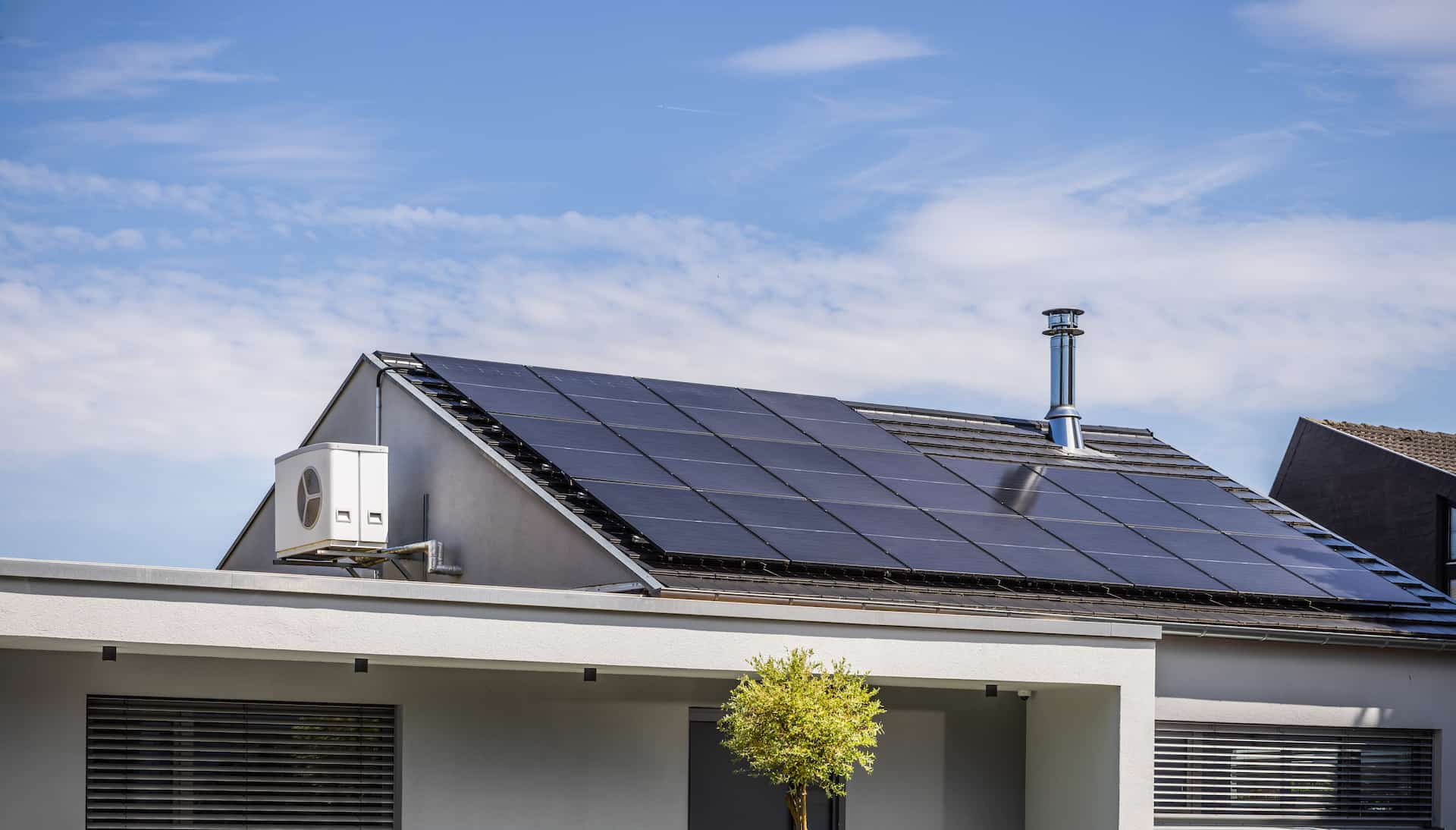
Most homes in Australia need around 30m² for a standard 6.6kW solar system.
This translates to about 2m² needed per panel, as a simple rule of thumb.
Still, a variety of factors, such as roof orientation and shading, affect the amount of roof space needed.
Understanding spacing requirements is vital to ensuring your solar system is as cost-effective and efficient as possible.
This guide will cover how to determine how much roof space is needed for solar panels and important factors to consider.
How Big Is a Standard Solar Panel in 2026?
Typical solar panel dimensions are around 1.7m × 1.1m. Common solar panels in Australia typically have a wattage range between 400W and 460W.
Most Australian homes install solar systems ranging from 6.6 kW to 10 kW. These common sizes require approximately 30 to 50 square metres of roof space.
Because modern panels are highly efficient, they can generate more energy from a smaller area. This means modern systems require less roof space than older systems.
Related Reading: How Do Solar Panels Work
Roof Space Required by System Size
6.6kW Solar System
Many Australian homes use 6.6kW solar systems. This system size is ideal for average-sized households. Generally, a 6.6 kW system will require around 28–32m² of roof space.
Learn about how to determine the right size solar system for your household here:
What Size Solar System Do I Need?
10kW Solar System
Another common solar system size in Australia is 10kW systems. A 10kW solar system requires approximately 44–50m² of roof space.
This size is suitable for large homes, households with high energy usage, or EV charging. A larger system size may also be suitable if you plan to incorporate solar battery storage.
You May Also Like: Solar Electric Car Charging
13kW–15kW Systems
Larger solar systems, such as 13kW to 15kW, require 60–70m² of roof space. These larger systems are ideal for high usage homes or small commercial facilities.
Learn more about our commercial solar packages on our page here: Commercial Solar.
| System Size | 6.6kW | 10kW | 13kW – 15kW |
| Approx. Roof Space Needed | 28–32m² space | 44–50m² space | 60–70m² |
| Ideal For | Average households | Larger homes or EV charging | High usage homes or small commercial facilities |
What Reduces Your Usable Roof Space?
Shading
Certain factors reduce usable roof space and need to be considered when planning a solar system setup. Shading is one of the biggest factors that affect usable roof space.
Significant shading from nearby trees, buildings, or chimneys can reduce energy production.
Additional solar panels may need to be included in the setup, requiring more roof space.
You May Also Like: How Does the Weather Affect Solar Panels and Energy Production?
Roof Orientation
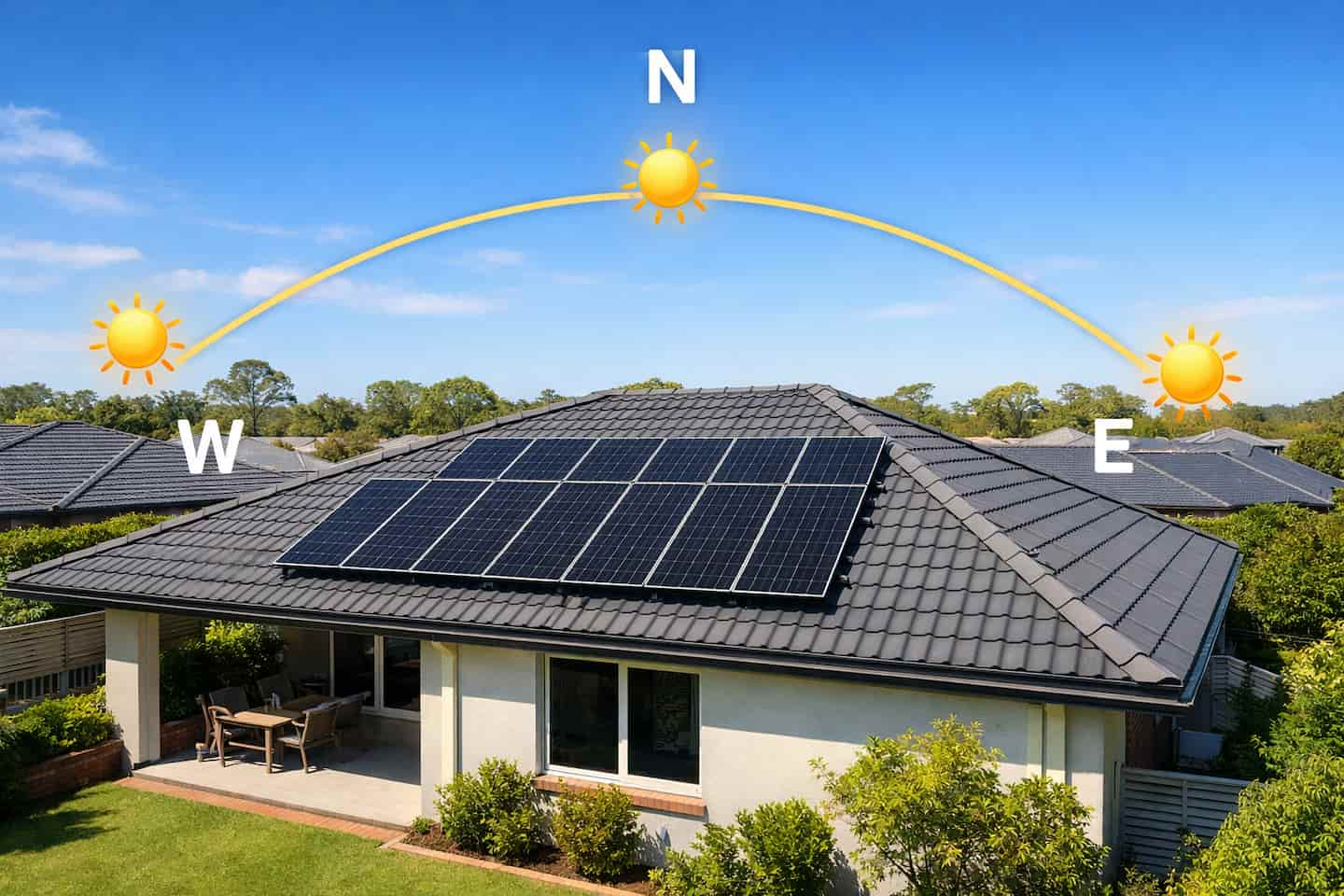
In Australia, north-facing solar panels are considered the most efficient roof orientation. With the sun in the Southern Hemisphere, energy generation is strongest with north-facing panels.
East or west roof orientation can provide an effective solar panel setup and strong energy generation with the right setup. South-facing panels may work if you use most of your energy during the colder months.
The tilt angle of your roof also affects solar panel efficiency. The ideal tilt angle is usually between 15° and 30°.
Learn more about the ideal roof orientation for solar panels in Australia in our guide here: Why Do Solar Panels Face North in Australia?
Roof Pitch and Layout
Even if a roof is large, that does not necessarily mean all of it is usable for solar panel installation. For instance, structural integrity and roof pitch need to be considered when planning panel layout.
These features may affect how much of the roof is usable space:
- Split arrays
- Complex roof shapes, such as roofs with very steep angles
- Safety setbacks, such as required fire setbacks or safety clearances
- Roof features, such as vents or skylights
You May Also Like: Solar Panel Installation Steps Guide
How to Estimate Your Roof Space in 4 Simple Steps
Here’s an easy formula for estimating solar panel roof space:
Step 1. Measure Usable Width and Height
Measure your roof’s usable width and height.
Step 2. Multiple Usable Width and Height
Multiply these measurements to get your total square metres (m²) of usable roof space.
Step 3. Determine Roof Space Needed Per Panel
Divide the total square metres by 2m² to get the roof space needed per panel.
Step 4: Schedule a Professional Consult
While this formula will give you a general idea of the required roof space, a professional consultation is crucial.
Once you have a general idea of your usable roof space, consider scheduling a consultation with a qualified solar technician.
A qualified solar technician can ensure accurate measurements while also considering any factors, such as:
- Roof orientation and tilt
- Household energy usage and patterns
- Shading concerns
- Solar panel efficiency
- Special considerations, such as skylights, chimneys, or structural concerns
What If My Roof Is Small?
We frequently talk to customers who are worried their roof is too small for a solar system to work. Fortunately, there are various ways to work around smaller roofs.
Small roofs, between 10 to 20 square metres, can usually still accommodate solar systems up to 3 kW. This size system is ideal for homes that want to use supplemental solar power or for highly energy-efficient households.
Some of the effective options for maximising energy production with a small roof include:
- Higher wattage panels to maximise energy output despite limited space
- Microinverters for split layouts
- East/west configurations
- Solar batteries to maximise output
Learn more about solar batteries and how they can help you work around a smaller roof size here: Solar Batteries.
Does Roof Space Affect Solar Rebates?
Yes, roof space does affect solar rebates. Small-Scale Technology Certificates (STCs) are based on solar system size. This means a larger system can lead to a higher total solar rebate.
More roof space can help you maximise your STC rebate, while a smaller or shaded roof may restrict install size.
Learn more about state solar rebates and how they work here:
Roof Space for Commercial Buildings
Commercial roofs require a few extra considerations to determine how much space is needed for a solar setup.
For instance, many commercial buildings have flat roofs as opposed to tilted residential roofs. Since 15 to 30 degrees is considered the optimal roof tilt, flat commercial roofs can pose an issue.
We utilise special tilt frames to establish the appropriate angle toward the sun. This maximises energy production, self-cleaning, efficiency, and airflow.
For larger system calculations for commercial buildings, we identify the usable roof area by evaluating:
- Unshaded areas
- Structurally sound areas
- Local fire codes and safety clearances
- Obstructions, such as HVAC equipment
Typically, commercial solar systems require around 4 to 6 square metres of roof space per kilowatt (kW) of installed capacity.
Learn more about roof space and commercial buildings here: Commercial Solar System Guide.
Solar System Consultations
Understanding how much usable roof space you have is an important step toward determining your ideal solar setup.
The general rules for required solar panel roof space are:
- 2m² per panel, but various factors can affect this estimate.
- 30m² for 6.6kW systems
- 45 to 50m² for 10kW systems
Various factors can affect these estimates, making it crucial to consult with a qualified solar technician.
A certified technician will determine the exact roof space needed, taking shading, energy usage, and other factors into account.
Ready to enjoy the benefits of a Residential Solar System? Contact our team at Aus Energy Solar to schedule your free solar consultation.